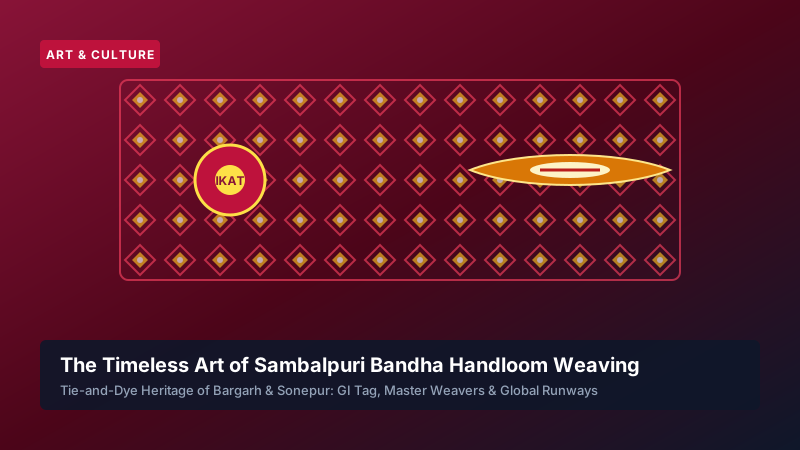
Woven with sacred devotion and precision mathematics, the Sambalpuri Bandha (Ikat) textile tradition of Western Odisha is renowned worldwide for its captivating visual rhythm and durability. Originating across the weaving villages of Bargarh, Sonepur, Bolangir, and Sambalpur districts, this centuries-old craft holds a prestigious Geographical Indication (GI) tag.
Unlike printed textiles where dyes are applied onto finished cloth, in Sambalpuri Bandhakala, the warp and weft yarns are meticulously tied with rubber ties and dyed in successive natural dye baths before being loaded onto handlooms.
Symbolic Motifs of Odia Folklore
Every pattern woven into a Sambalpuri saree carries deep spiritual and natural symbolism:
- Shankha (Conch Shell): Symbolizes auspicious divine protection and spiritual purity.
- Chakra (Wheel): Represents the cosmic wheel of law and time inspired by Konark architecture.
- Padma (Lotus): Signifies prosperity, resilience, and divine beauty rising from muddy waters.
- Pasapalli (Chessboard Grid): Inspired by the gambling game of the Mahabharata, Pasapalli features contrasting square checks that demand extreme precision to keep edges pin-sharp on the loom.
Sustaining the Weaving Communities
Through cooperative federations like Boyanika and Utkalika, modern market linkages have connected village weavers directly with international fashion buyers. Youth across Sambalpur are also incorporating modern silhouettes—including ikat blazers, laptop sleeves, and contemporary home decor—ensuring the craft remains economically vibrant for generations to come.